An Overview of the Supreme Court System
📅 2026 Update: Recent Supreme Court Rulings
Since the original article was published, several key court decisions have impacted constitutional rights and the Supreme Court system. These rulings touch on important topics such as due process, qualified immunity, and First Amendment rights. The earlier article continues further down the page.
⚖️ Recent Rulings on Due Process
The Texas Supreme Court case State v. Ochoa ruled in November 2024 that the interrogation of a 14-year-old defendant was unconstitutionally coercive. This decision violated the defendant's Fourteenth Amendment due process rights.
It emphasizes the importance of protecting young people's rights during legal processes.
🛡️ Qualified Immunity Clarified
On March 23, 2026, the U.S. Supreme Court made a significant decision in Zorn v. Linton.
The Court reversed a lower court's ruling and granted qualified immunity to an officer who used a wristlock on a protester after giving a verbal warning. This ruling clarifies when law enforcement can be shielded from lawsuits regarding their use of force.
🗣️ First Amendment Scrutiny
In Chiles v. Salazar, decided on March 31, 2026, the Supreme Court overturned Colorado's law banning conversion therapy. The Court stated that this law regulates speech based on viewpoint, which requires strict scrutiny under the First Amendment.
This ruling is crucial in understanding the balance between state regulation and free speech.
🚨 Warrantless Entry in Emergencies
The Supreme Court affirmed in Case v. Montana on January 14, 2026, that police can enter a home without a warrant if they reasonably believe someone inside needs emergency assistance. This decision highlights the need for police to act swiftly in life-threatening situations, while also considering individual rights.
📌 Key Takeaways
- ⚖️ State v. Ochoa protects minors' due process rights.
- 🛡️ Zorn v. Linton clarifies qualified immunity for police.
- 🗣️ Chiles v. Salazar emphasizes First Amendment protections on speech.
- 🚨 Case v. Montana allows warrantless entry for emergency assistance.
💡 Tips for Understanding Constitutional Rights
Review the details of your situation with your attorney.
🧠 Understand Your Rights
Familiarize yourself with the Fourteenth Amendment, which protects due process rights. Knowing your rights can help you understand if they have been violated.
📜 Know the Role of Qualified Immunity
Qualified immunity protects government officials from lawsuits unless they violated clearly established laws. Understanding this can help clarify the limits of accountability for law enforcement.
🗣️ Recognize Free Speech Protections
The First Amendment protects your right to free speech. This includes the ability to challenge state laws that may infringe upon your ability to express your views.
🚨 Emergency Situations and Law Enforcement
In emergencies, police may enter homes without a warrant if they believe someone is in danger. Understanding this law can help clarify the boundaries of police actions during crises.
📚 Stay Informed about Landmark Cases
Following recent rulings can provide insight into how constitutional rights are evolving. Staying informed helps you understand the current legal landscape regarding your rights.
🏆 Free Options Ranked by User Reviews (2026)
No national paid service met the review threshold for this topic, so this section lists free government and nonprofit resources.
🥇 1. ACLU of Texas
The ACLU of Texas offers legal support and advocacy for issues related to civil liberties in Texas. They provide resources for individuals facing constitutional rights violations, especially concerning due process and interrogations.
🥈 2. ACLU
The ACLU works nationwide to protect individual rights and liberties. They challenge government actions that infringe on First Amendment rights, making them a valuable resource for those facing legal challenges related to free speech.
🥉 3. Center for Constitutional Rights
The Center for Constitutional Rights (CCR) focuses on legal cases that advance civil rights and social justice. They often take on cases involving government overreach and targeted killings, supporting individuals challenging such actions.
🔎 What to Check Before Paying for Help
- 💰 Investigate if free resources are available first.
- 📝 Review the qualifications of any organization.
- 🔍 Check for reviews or testimonials from previous users.
- 📞 Contact organizations to ask about their services.
❓ Frequently Asked Questions
❓ What is qualified immunity?
Qualified immunity protects government officials from civil suits unless they violated a clearly established constitutional right. This means that proving a violation can be challenging.
⚖️ How do recent rulings affect minors in legal situations?
Recent rulings, like State v. Ochoa, reinforce that minors have specific protections under the Fourteenth Amendment. This ensures their rights are safeguarded during interrogations.
🏛️ What should I do if I feel my free speech rights have been violated?
If you believe your First Amendment rights have been infringed, consider reaching out to organizations like the ACLU. They can provide guidance on potential legal actions.
🔒 Can police enter my home without a warrant?
Yes, as established in Case v. Montana, police can enter without a warrant if they believe someone inside requires immediate assistance. However, this must be based on reasonable belief.
📜 What is the significance of the Chiles v. Salazar ruling?
This ruling highlights the importance of First Amendment protections. It reinforces that laws regulating speech must be carefully scrutinized to ensure they do not infringe on free expression.
🔍 How can I stay updated on landmark cases?
You can follow legal news outlets or organizations focused on civil rights. They often report on significant rulings and their implications for individual rights.
⚖️ Recent Cases Impacting Constitutional Rights
Several recent court rulings have shaped the understanding of constitutional rights in the U.S. These decisions touch on key issues like due process and free speech.
- Supreme Court affirms jurisdiction in arbitration casesSupreme Court of the United States · May 14, 2026
- Alaska Supreme Court rules on adoption case involving parental rightsAlaska Supreme Court · July 15, 2026
- Alaska Supreme Court Reverses Termination of Father's RightsAlaska Supreme Court · May 29, 2026
- New Mexico Supreme Court Rules on Speedy Trial RightsNew Mexico Supreme Court · May 18, 2026
Explore more recent rulings in the news section by checking out more rulings on the news page.
End of October 2026 Update
The Supreme Court is the highest court in the United States and plays a crucial role in shaping the country's legal landscape. The Court's decisions have far-reaching consequences that affect American society at large. In this article, we will explore the history and inner workings of the Supreme Court system and discuss some of its most significant decisions.
History of the Supreme Court System
The Supreme Court was established by the Constitution in 1789, but its powers and structure were not defined until the Judiciary Act of 1789 was passed. The Court's primary role is to interpret the Constitution and ensure that federal laws and activities are consistent with the Constitution. It was designed to be the final arbiter in legal disputes and to give legal interpretation to the principles set forth in the Constitution.
Initially, the Supreme Court was relatively weak and had a limited impact on American society. It was not until 1803, with the landmark case of Marbury v. Madison, that the Court claimed the power of judicial review—the ability to strike down laws that it deemed unconstitutional. This decision established the principle of judicial review and helped to establish the Supreme Court as an institution with real power and influence.
Structure of the Supreme Court System
The Supreme Court system is made up of two types of courts: the Supreme Court and lower federal courts. The Supreme Court has nine justices—eight of whom are Associate Justices and one who serves as the Chief Justice of the United States. Justices are appointed by the President and confirmed by the Senate. Once appointed, Justices serve for life and can only be removed from their position by impeachment.
The Supreme Court hears cases on appeal from lower courts. It has the power to issue writs of certiorari, which are orders that require lower courts to submit their records of cases for review by the Supreme Court. The Court generally hears cases only if they present important legal questions and involve a split among lower courts. The Court typically issues around 80 opinions each year.
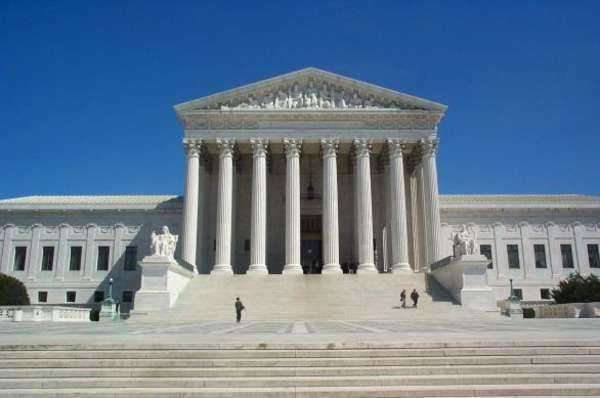
The Supreme Court's decisions are binding and serve to establish legal precedent. This means that lower courts must follow the Court's decisions in similar cases. The Court's rulings are also influential outside of the legal system, often helping to shape public policy and public opinion.
Significant Supreme Court Decisions
Over the years, the Supreme Court has heard many important cases that have had a significant impact on American society. Here are some of the most significant:
Brown v. Board of Education (1954): This landmark case declared segregation in public schools unconstitutional. It was a major victory for the civil rights movement and helped to pave the way for further desegregation efforts.
Roe v. Wade (1973): This case established that a woman's right to an abortion was protected under the Constitution. The decision was controversial and has been the subject of fierce debate ever since.
Bush v. Gore (2000): This case determined the outcome of the 2000 presidential election. The Court intervened in the Florida recount and effectively handed the election to George W. Bush.
Citizens United v. Federal Election Commission (2010): This decision struck down limits on corporate and union spending in political campaigns, opening the floodgates for unlimited corporate money in politics and sparking a public debate about the role of money in politics.
Obergefell v. Hodges (2015): This case established same-sex marriage as a constitutional right. It was a major victory for the LGBTQ community and marked a significant milestone in the fight for equality.
Conclusion
The Supreme Court system is a vital component of the American legal system. Its decisions have a profound impact on American society, and the Court's rulings are often cited as precedents in future legal cases. The Court's ability to interpret the Constitution and uphold its principles is essential to the functioning of American democracy. As such, it is important for all citizens to understand the role and influence of the Supreme Court in American society.
The Supreme Court of the United States is the highest judicial organization in the United States. The Supreme Court is the prime court of the Federal judiciary of the nation.
The Supreme Court is headed by the Chief Justice of the United States, along with eight Associate Justices. The Justices of this Court are all nominated by the President of the United States and then is confirmed by a vote of the United States Senate.
Supreme Court Justices, once appointed, have a life-long term in the position, which can only be terminated in the case of death or retirement. Impeachment is also grounds to remove a Supreme Court Justice.
The Supreme Court is located in Washington, D.C. in the United States Supreme Court Building. The Supreme Court essentially has jurisdiction over all Federal matters, though the exact powers of the Court are more specifically outlined in the United States Constitution. Constitution laws have more information about the
Supreme Court.