The Declaration of Independence
📅 2026 Update: Current Status of Historical U.S. Documents
Since the original article was published, there have been no significant legislative amendments to the U.S. Constitution, the Bill of Rights, or the Articles of Confederation from 2024 to 2026. This means the foundational texts that shape the legal framework of the United States remain unchanged.
Readers can find the earlier article further down this page for more detailed information.
📜 No New Legislative Changes
There have been no new changes to the U.S. Constitution, Bill of Rights, or Articles of Confederation in the past two years. This stability indicates that the core legal documents continue to function as the basis for American law without any recent updates.
🌐 Free Access to Historical Documents
Accessing historical documents like the Declaration of Independence, Articles of Confederation, and Bill of Rights is completely free. These documents are publicly available online through various government and educational websites, providing easy access for anyone interested in studying them.
📋 No Forms Required
There are no forms or application steps necessary to access these historical documents. They can be viewed and studied freely by anyone interested, which encourages public engagement with American history.
⏳ Immediate Availability
These foundational texts are available for immediate access online. There are no waiting times or processing delays, allowing anyone to explore them at their convenience.
📌 Key Points Summary
- No significant legislative changes since 2024.
- Free access to historical documents online.
- No forms or applications needed to study these texts.
- Immediate availability for public use.
- No eligibility requirements to access these documents.
💡 Tips for Understanding Historical U.S. Documents
Reviewing your situation with an attorney can help clarify legal questions related to historical U.S. documents and their implications.
📚 Read Original Texts
Study the original texts of the Declaration of Independence, Articles of Confederation, and Bill of Rights. Primary sources provide direct insight into the values and intentions of the founders.
🏛️ Visit National Archives
Utilize the resources available at the National Archives. They offer free access to the Bill of Rights and other founding documents, making it an excellent place for research.
📖 Explore Library of Congress Resources
The Library of Congress provides extensive resources and research guides on the Bill of Rights. These materials can deepen your understanding of the context and significance of these documents.
💡 Utilize Online Educational Platforms
Many educational websites offer courses and materials on U.S. history and constitutional law. Exploring these platforms can enhance your knowledge about the founding documents.
🕰️ Stay Updated on Related Topics
Keep an eye on recent discussions and changes in constitutional law. Understanding how these documents are interpreted today can provide important context for their historical significance.
🏆 Services Related to U.S. Constitutional Documents Ranked by User Reviews (2026)
This section details services that provide assistance related to legal documents, including those that may pertain to constitutional rights and historical research. The order follows Trustpilot data from October 2026, noting that scores may change over time. Ratings reflect user experiences, but keep in mind that unhappy customers often leave more reviews, which can influence scores.
🥇 1. Swyft Filings
Swyft Filings has been rated 4.7. The company is known for its business formation services, including LLC registration, which can intersect with foundational legal principles. However, some users have noted that the pricing can be higher than competitors.
🥈 2. TotalLegal.com
TotalLegal.com holds a Trustpilot rating of 4.7. It is recognized for its legal document preparation and online legal services that can assist individuals in understanding their rights under the Constitution. Some users have raised concerns about the responsiveness of customer support.
🥉 3. VitalChek
VitalChek has a Trustpilot score of 4.4. This service specializes in vital records processing, including birth certificate orders, which can be essential for legal identity documents. Users have noted that delivery times may vary and that there are additional fees for expedited services.
🆓 Free Access to Government Resources
Free resources are available through platforms like the National Archives and Library of Congress. These institutions provide access to foundational documents and research guides that help individuals understand the U.S. Constitution and its amendments.
🔎 Considerations When Choosing Services
- 📝 Evaluate the trustworthiness based on user reviews.
- 💰 Compare pricing against competitors.
- 📞 Check for customer support responsiveness.
- 📄 Review the types of documents offered and their relevance to your needs.
- ⏳ Look into processing times for document retrieval or services.
❓ Frequently Asked Questions
❓ What is the significance of the Declaration of Independence?
The Declaration of Independence is crucial as it formally announced the American colonies' separation from British rule on July 4, 1776. It laid the groundwork for the values of freedom and democracy in the United States.
❓ Where can I access the Bill of Rights?
The Bill of Rights can be accessed for free at various government and educational websites, including the National Archives and the Library of Congress. These resources provide easy access to the text and its historical context.
❓ Are there any costs associated with studying these historical documents?
There are no costs associated with accessing or studying historical documents like the Declaration of Independence or the Bill of Rights. These documents are publicly available online for anyone to view.
❓ Is there any processing time for accessing these documents?
No processing time is required to access these historical documents. They are available online for immediate viewing.
❓ Do I need special permissions to study these documents?
No special permissions or eligibility requirements are needed to study historical documents like the Constitution or the Bill of Rights. They are public records accessible to everyone.
❓ How can I learn more about the Articles of Confederation?
You can learn more about the Articles of Confederation through research guides available at the Library of Congress and the National Archives. These institutions offer extensive resources for understanding this important historical document.
⚖️ Recent Court Cases Related to Constitutional Rights
Recent court rulings continue to shape the interpretation and application of the U.S. Constitution and its amendments. These decisions reflect ongoing discussions about individual rights and government powers.
- Supreme Court rules on asylum seekers at US-Mexico borderSupreme Court of the United States · June 25, 2026
- Oregon Supreme Court rules on indictment amendment caseOregon Supreme Court · July 16, 2026
- Michigan Supreme Court rules SORA registration unconstitutionalMichigan Supreme Court · July 22, 2026
- Ohio Supreme Court rules on victim's delayed appeal rightsOhio Supreme Court · July 22, 2026
For more recent rulings, feel free to browse more rulings on the news page.
End of October 2026 Update
The Declaration of Independence is a doctrine that was primarily authored by Thomas Jefferson in 1776, with the assistance of other prominent political figures of the time, such as John Adams, Benjamin Franklin, Robert Livingston, and Roger Sherman. Once the Continental Congress had approved of its contents, they disseminated the final draft of the Declaration of Independence to all of the newly-independent 13 states in the hopes of the document’s ratification.
On July 4th, 1776, the Declaration of Independence was approved by 12 of the 13 states of the American Union. New York’s individual State Legislature did not allow its appointed representatives the permission to vote in a national forum. However, New York State approved the document on July 15, 1776, upon being granted permission by its State Legislature.
The intended purpose of the Declaration of Independence was multifaceted. As its name suggests, the inception of the Declaration of Independence served to confirm the autonomy of the United States of America as a sovereign nation, emancipated from the control of the British monarchy. In no uncertain terms, the Declaration of Independence established a complete disengagement from the British monarchy, as well as King George III.
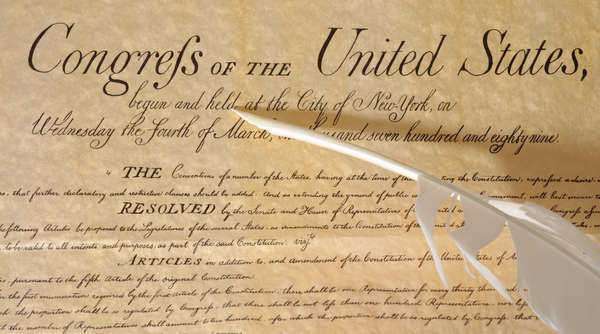
The Declaration of Independence clarified the role of a central government in the United States. Contrasting what was deemed as tyrannical by citizens who had lived under the rule of King George II’s monarchy, the authors of the Declaration of Independence constructed a gubernatorial model that solidified the role of a centralized government as a ruling body whose function is to serve its citizens.
The Declaration of Independence illustrates various contingencies in which the citizens of the United States are entitled to overthrow a government that they deem tyrannical. Such contingencies include a central government’s refusal to provide ‘Life, Liberty, and the Pursuit of Happiness’ to its citizens. In addition, the Declaration of Independence calls for the acting central Government to operate under the pretense that the citizens whom it is sworn to protect concede to be governed.
This act of concession on the part of the citizens was a contrary dynamic to the previous monarchical model under which the colonists were ruled prior to the Revolutionary War. The authors of the Declaration of Independence wished to illustrate that the citizens of the United States were allowing themselves to be governed, rather than having authority unwillingly foisted upon them.
The authors of the Declaration of Independence not only wished to create a new paradigm of governmental rule, but they were also determined to illustrate the flaws of a monarchical ruling body. The remainder of the doctrine assails King George III, who was the acting Monarch of England at the time, of the penning of the Declaration of Independence. Thomas Jefferson, who was considered to be the foremost critic of King George III, outlined the Monarch’s various transgressions against liberty, justice, and democracy.
The Declaration of Independence not only solidified the United States as a sovereign nation but also set the philosophical and political groundwork for the establishment of a governing body that would act as a servant to its citizens - the first political model of its kind.